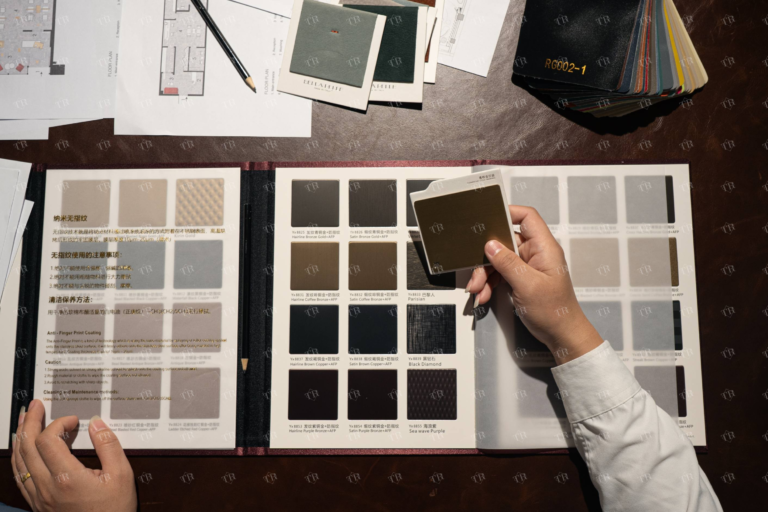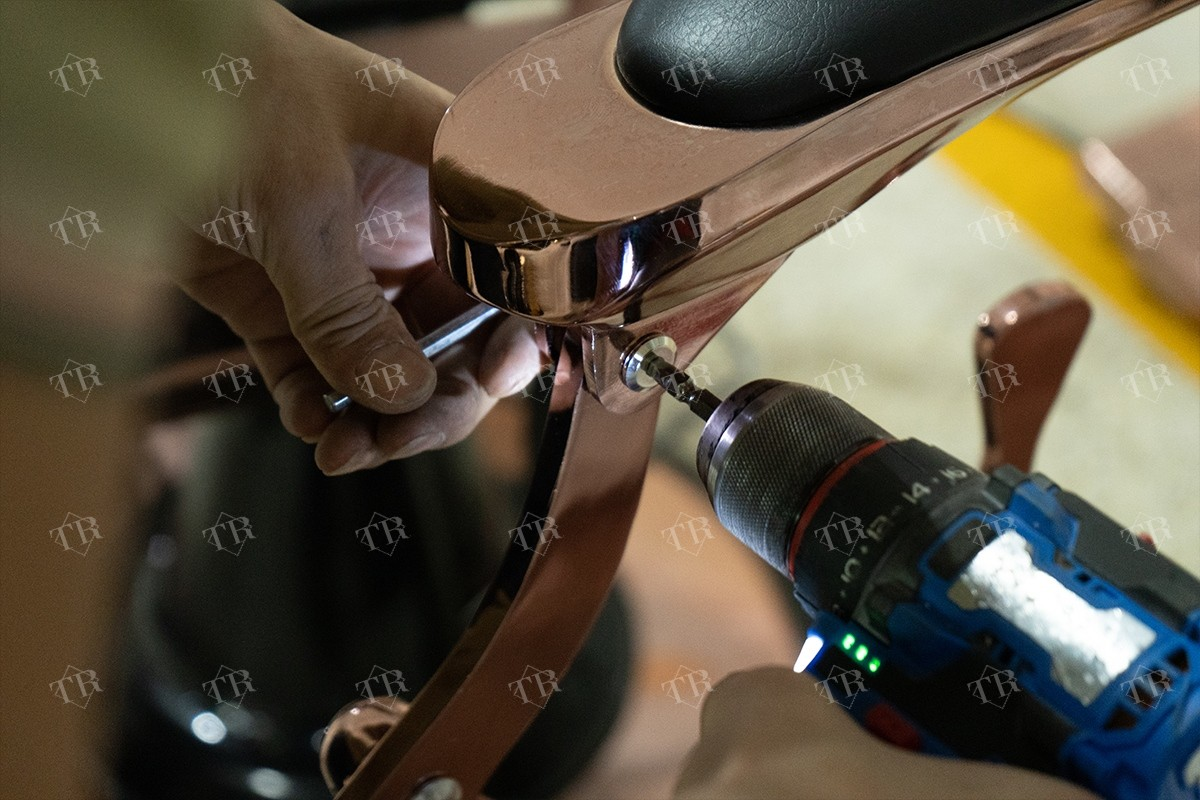
Establishing a high-margin line of private label salon furniture begins with a cohesive product family supported by consistent design aesthetics. It requires precision brand badging, protective export packaging, and professional commercial sales assets. Rather than starting with superficial logo placement, enduring brand equity stems from partnering with a capable OEM manufacturer. The factory must guarantee dimensional repeatability across repeat container shipments. Drawing on 15 years of manufacturing experience, TURRI helps distributors launch private-label collections through tailored upholstery finishes, engraved metal nameplates, and serialized warehouse labeling.
Start with a Coherent Private Label Product Family
Private label salon furniture is defined as factory-engineered commercial equipment manufactured under contract, customized with proprietary finishes, branded badging, and retail packaging, and marketed under the distributor’s exclusive trademark. Building an enduring brand begins with assortment discipline rather than graphic design. Founders and sourcing directors should curate a focused collection of base models sharing consistent ergonomics, structural materials, and pricing tiers.
Partnering with an experienced manufacturer streamlines collection architecture. When a single partner produces across beauty beds, barber chairs, head-spa units, nail tables, and reception desks, brand owners can develop harmonious multi-zone collections. Coordinated collections ensure that vinyl colors, metal electroplating, and wood accents match precisely across hydraulic styling chairs and electric beauty beds. Assortment planning must balance client visual impact against warehouse inventory holding costs. Establishing modular SKU families allows regional distributors to reorder high-turnover models without disrupting production schedules.
- Step 1: Core Assortment Curation: Select 3 to 5 high-demand anchor models sharing matching metal finishes and harmonious visual silhouettes.
- Step 2: Custom Material & Identity Callouts: Lock exclusive Pantone-matched commercial PU vinyl rated for 50,000 Martindale rubs and precision-etched 304 stainless steel logo badges.
- Step 3: Export Packaging & Barcode Systems: Standardize five-ply double-wall cartons pre-printed with private brand graphics, international handling icons, and serialized warehouse barcodes.
- Step 4: Digital Sales Asset Deployment: Supply distribution partners with high-resolution white-background studio photography, dimensioned CAD schematics, and comprehensive technical maintenance manuals.
Define Product Customization and Brand Identity Together
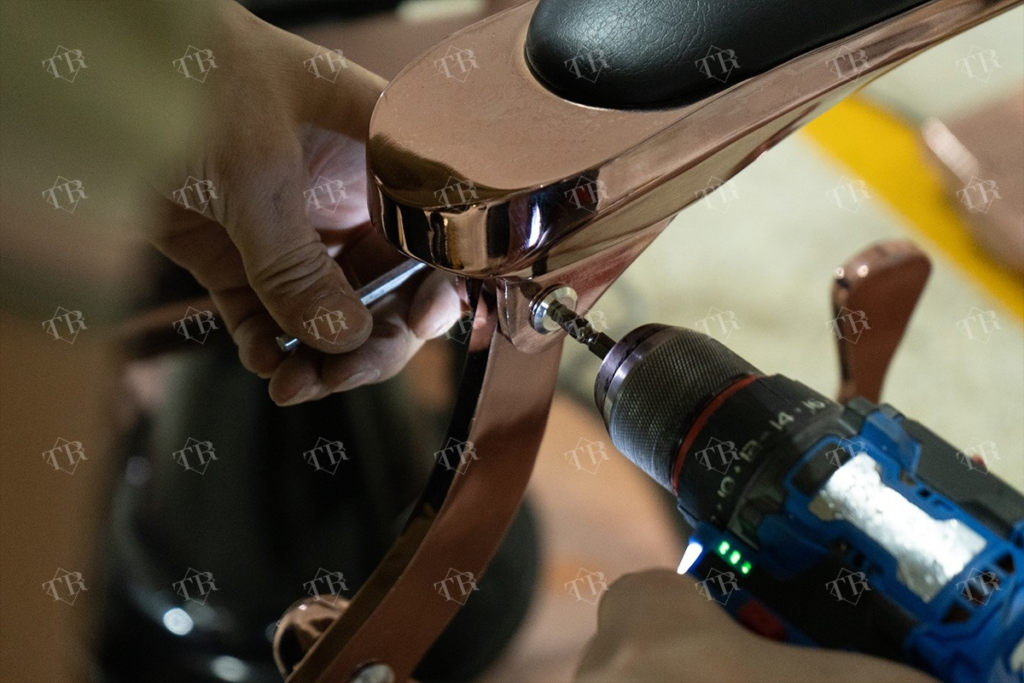
Effective private labeling integrates brand identity directly into physical equipment through layered customization tiers rather than relying on surface decals. Upholstery customization establishes the collection’s primary tactile and visual signature. Selecting exclusive commercial-grade vinyl colors, tailored grain textures, and contrasting perimeter stitching differentiates private-label models from generic catalog offerings while meeting medical-grade salon sanitization requirements.
Hardware and surface finishes provide essential secondary branding touchpoints. Custom powder-coated bases, brushed metal footrests, matte-black hydraulic pump casings, and precision-etched 304 stainless steel nameplates elevate perceived value. TURRI accommodates accessible order thresholds for private-label branding, requiring 5 to 10 units per catalog SKU for branded nameplates and master cartons, and 20 units for custom dyed upholstery.
Engineering adaptations can be incorporated to meet regional market preferences. Adjusting seat widths, modifying foam resilience, incorporating localized electrical sockets, or integrating proprietary tool holders transforms standard models into exclusive commercial assets. Pre-production prototype sign-offs ensure that mechanical adjustments perform reliably before volume production starts. Direct engineering collaboration ensures that customized dimensions maintain structural balance under dynamic client weight.
Carry the Brand into Packaging, Labels, and SKU Systems
A private-label brand’s commercial credibility depends on packaging engineering and logistics presentation. When containers arrive at distribution warehouses or client salons, packaging serves as the initial physical manifestation of brand quality. Custom-printed five-ply corrugated master cartons featuring high-contrast brand logos, standardized shipping marks, and model illustrations establish immediate commercial authority. Transit packaging must pass standard drop tests to prevent damage. Molded interior foam blocks isolate delicate mechanical components during maritime transport.
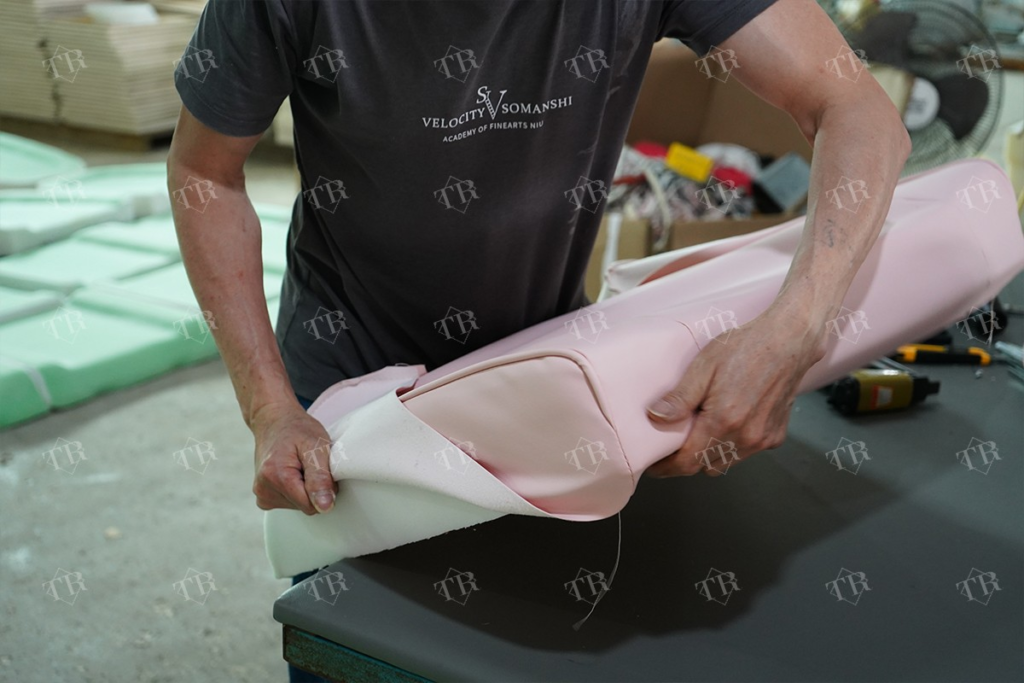
TURRI delivers comprehensive packaging customization, supporting heavy-duty master cartons, reinforced edge guards, molded foam corner blocks, and moisture barriers. Cartons can feature customer-specified branding, localized regulatory compliance markings, handling instructions, and serialized warehouse barcodes. Systematizing SKU codes and barcode labels streamlines distribution, inventory tracking, and warranty validation. Standardized labeling prevents dispatch errors during multi-branch salon rollouts. Serialized tracking links every carton directly to its factory quality inspection sign-off sheet.
Build Sales Assets and Standardize the Collection for Scale
A competitive private-label brand requires unified, technically precise product information across all distribution channels. Distributors need comprehensive sales assets to onboard regional sales representatives, equip showroom staff, and populate digital B2B portals. Providing high-resolution studio photography, dimensioned CAD schematics, color swatch samples, detailed specification sheets, and multilingual user operation manuals accelerates commercial market adoption.
TURRI unites full-category manufacturing infrastructure with tailored OEM/ODM product development, precision private-label branding, reinforced export packaging, and professional technical sales collateral. This comprehensive manufacturing framework enables emerging and established beauty brands to launch scalable furniture collections backed by predictable production capacity and direct engineering support.
Standardizing technical specifications ensures that reorders maintain unvarying dimensional tolerances, foam resilience, and upholstery dye-lot consistency across multiple container shipments over several years. This manufacturing repeatability protects distributor margins against field warranty claims. Systematic quality documentation provides an objective baseline for factory replenishment orders. Archiving signed master production sheets guarantees that future production cycles mirror original engineering tolerances.
Private Label Salon Furniture FAQs
These operational answers guide brand founders, wholesale distributors, and salon chain executives through product selection, custom badging, branded packaging, and collection scaling.
Which Products Should a New Private-Label Collection Start With?
New brands should launch with a focused collection of high-demand core products. Sourcing three to five signature models builds brand recognition while minimizing initial inventory risk. Suitable initial selections include hydraulic styling chairs, shampoo backwash stations, and electric treatment tables.
Which Product Elements Can Be Customized?
Private-label programs can customize upholstery vinyl colors, surface textures, decorative stitching, metal plating finishes, embroidered logos, cast metal nameplates, control switch layouts, and carton packaging.
What Should Branded Packaging Include?
Branded packaging should include custom-printed five-ply master cartons, corporate logos, model illustrations, fragile handling icons, international shipping marks, warehouse barcodes, and multilingual assembly instruction booklets.
Which Sales Assets Help a Distributor Launch the Collection?
Distributors require high-resolution studio photography on white backgrounds, dimensional CAD drawings, upholstery swatch books, technical specification sheets, retail price lists, and warranty care guidelines.
How Does Standardization Help the Brand Scale?
Standardizing engineering specifications and material codes ensures that reorders maintain identical color consistency, frame tolerances, and mechanical performance across successive production batches and container shipments.
Build a Private-Label Development Brief with TURRI
A complete private-label development brief connects target product assortments, engineering customizations, brand badging, protective packaging, and technical marketing collateral into an executable commercial program. To establish your proprietary salon furniture collection with direct factory support, submit your branding parameters, model selections, and volume forecasts. Connect through https://turrisalon.com/ to initiate a structured collection review.